
Primary Healthcare Access
A vision to support healthcare excellence in Nanaimo.
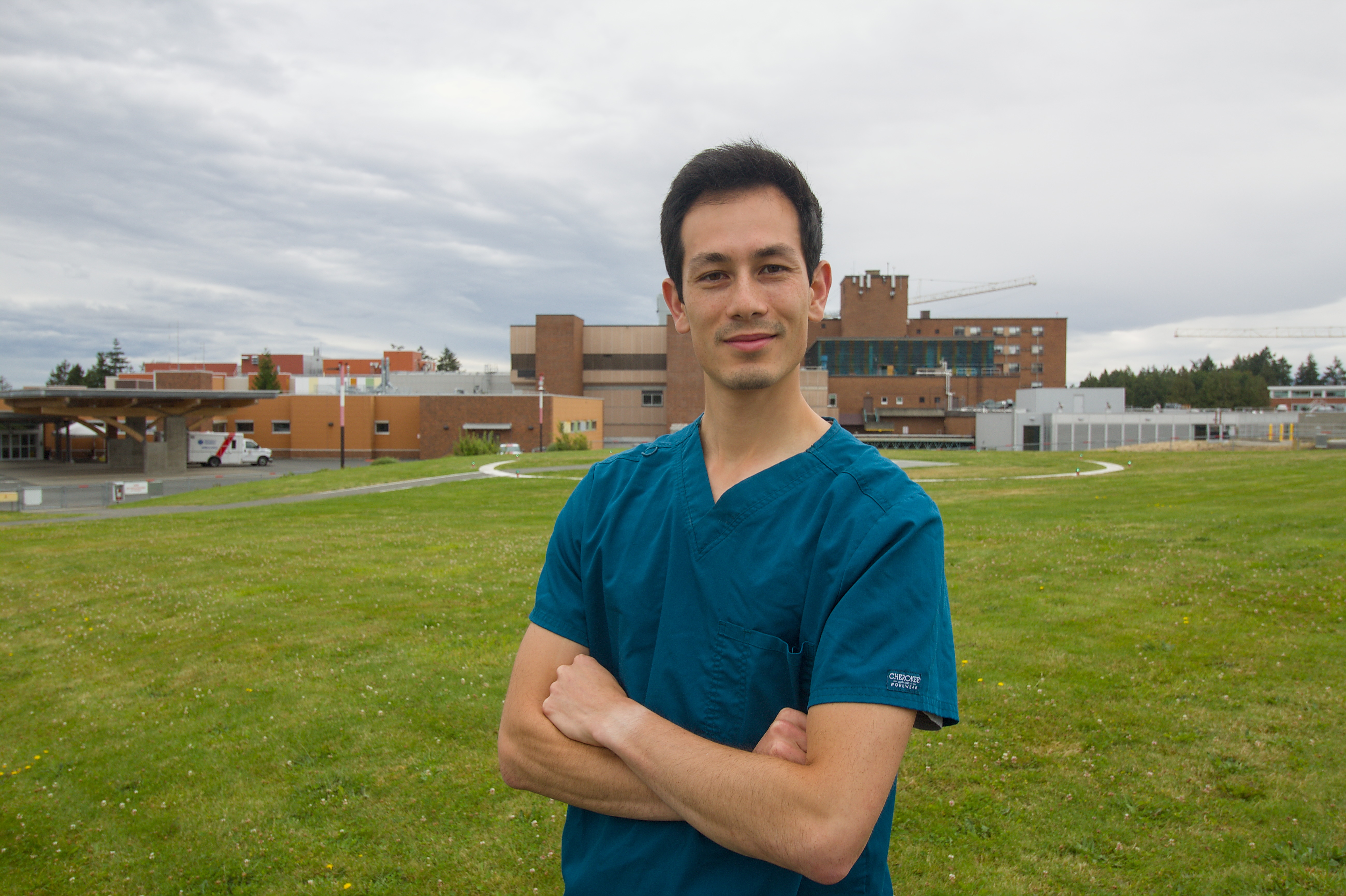
While healthcare delivery is a provincial responsibility, neighbouring land use, area zoning, street parking, and direct political pressure lie at the feet of the municipality.
Council has more leverage on this critical file than it has utilized in the past, and I plan to work with other councillors to build a united front that can champion this vital service that everyone in our region depends on.
The commitments below are the ones a city council can credibly keep in a four-year term.
Commitments
Study and implement a municipally run primary care clinic based on the Colwood Clinic model. Colwood's clinic operates with salaried physicians delivering care to patients previously without a family doctor. Other Canadian cities have moved into primary care delivery when the Province has been too slow to act, and the City of Colwood is just one example on Vancouver Island.
The clinic model is not the only option worth considering. A year of serious work should also examine contracting through a non-profit operator, partnering with organizations such as the Nanaimo Division of Family Practice and the Nanaimo and District Hospital Foundation, and supporting the expansion of nurse practitioner capacity with the Nexus primary care clinic.
At the end of the first year, council either has a project to action or a documented case for why the model does not fit Nanaimo. Either way, the roughly 20,000 residents currently without a family doctor get a clearer answer than they have today. On something as fundamental as healthcare, we should strive to elect councillors who will not look the other way when a fifth of our residents face the prospect of waiting in the emergency room for their non-emergent health concerns.
Advocate for the construction of a cardiac catheterization lab at Nanaimo Regional General Hospital within three years, and a new patient tower to follow. Our regional hospital is the central healthcare facility for the roughly 500,000 people between the Malahat and Port Hardy. The Regional District of Nanaimo is the fifth largest regional district in BC and the only one in the top 5 without a cardiac catheterization lab. Patients travel to Victoria or Vancouver for cardiac procedures that should be available here, and this imposes a significant burden on patients and their families.
Funding is not the obstacle. On December 9, 2025, the Nanaimo Regional Hospital District passed a unanimous motion to fund the full up-front cost of planning, constructing, and equipping the cath lab. The region has put its money on the table and asked the Province to accept it. Council should be a dependable voice in the room beside the doctors, nurses, and health sciences professionals, to fully support healthcare excellence in Nanaimo.
Lobby for a Mental Health and Addictions Emergency Room, modelled on the existing Seniors' Emergency Room. The Seniors' Emergency Room at Nanaimo Regional General Hospital has worked well for this segment of the population. A specialized intake for the mental health and addictions crises that currently move through the main emergency room is the next logical step.
Other Canadian hospitals have built these facilities. They improve patient dignity and appropriate treatment, and they reduce stigma for people experiencing these incredibly difficult situations. They also allow the general emergency room to function as it should, with both hospital staff and patients feeling safer in the building. The next council should make the case for further consideration by the Province.
Collaborate with the Nanaimo and District Hospital Foundation and the Nanaimo Division of Family Practice. The Foundation often raises capital for the equipment our hospital needs faster than the Province does. The Division organizes the local family doctors, understands where the gaps are, and is the most credible partner on any recruitment or retention program the city runs. Council's role is to be a regular partner to both bodies, and that means taking their initiatives seriously so unnecessary delays are not caused by municipal bureaucracy and red tape.
Support nurse practitioner clinics such as the Nexus Primary Care Clinic. Nurse practitioners are qualified to deliver most of the primary care Nanaimo's unattached patients need, and Nexus is already delivering that care to residents without a family doctor. Council's role is to remove municipal barriers where they exist, to make suitable space available at rates this organization can afford, and to advocate provincially for the funding structure that clinics such as these can rely on over the long term.
Short-term housing for new healthcare workers. Council can partner with community stakeholders such as the Nanaimo and District Hospital Foundation to make short-term housing available for new healthcare professionals arriving in Nanaimo. Recruitment is one of the concrete files where a municipal contribution moves the needle, and a growing workforce is what makes every other commitment on this page deliverable.
The Hospital and University area is designated a Transit-Oriented Area, which means provincial law requires the City to allow higher density within four hundred metres of the bus exchange. That tool was designed for housing, and it works equally well for medical clinics, professional offices, and staff housing. As new healthcare professionals arrive in our city, modern housing units within walking distance of the hospital are a direct advantage. We already do this for out-of-province locums, so there is a real case to be made for our regular staff who live, spend, and raise their families in the Harbour City.
The next council should direct staff to amend the local zoning to allow medical and professional uses within the Hospital transit-oriented area alongside the residential density the provincial rule requires, and to fast-track applications for the kinds of buildings that will house the workforce the regional hospital needs.