
Improved Transportation Network
A public transit system that works for youth, seniors, and families.
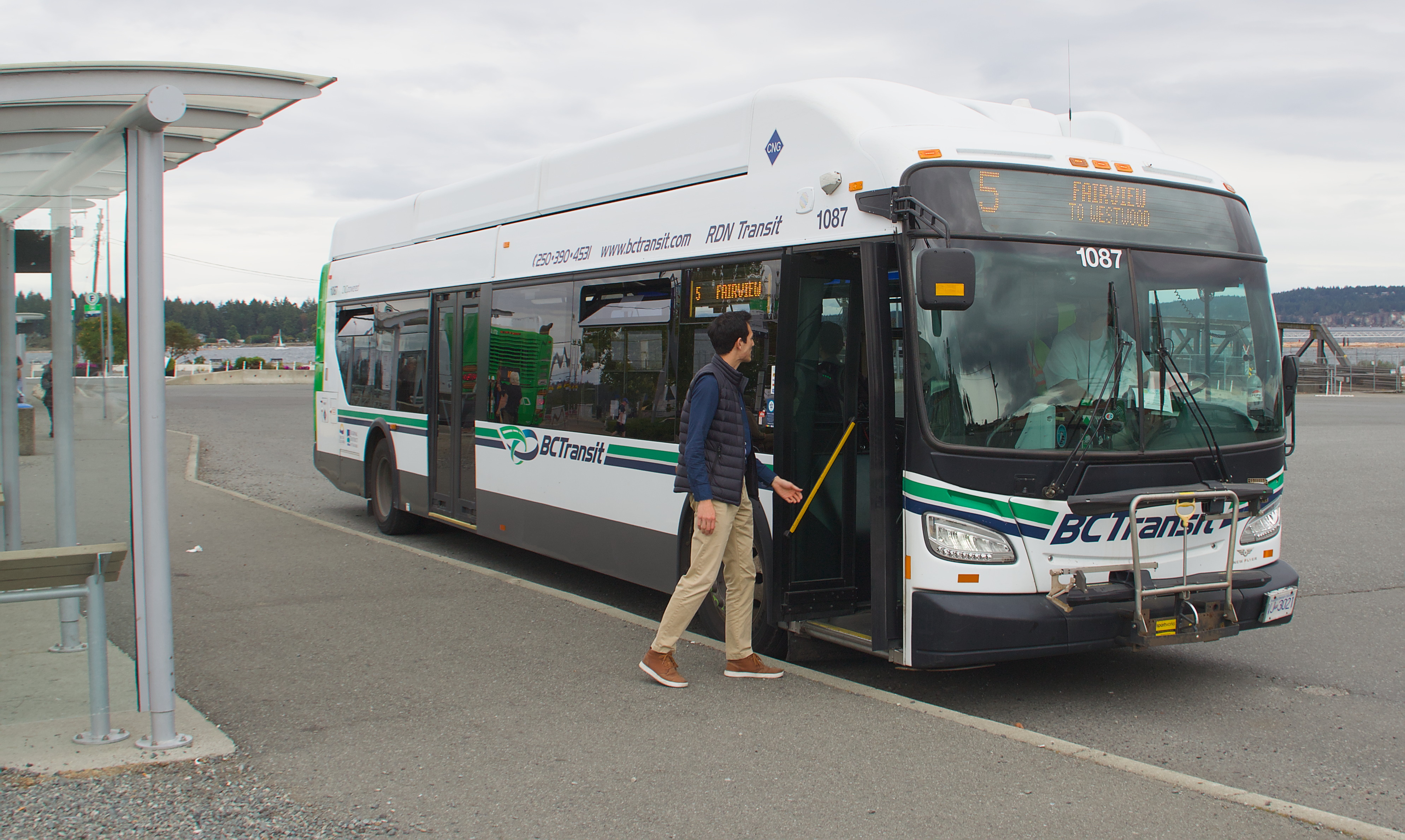
Gradual but specific changes to transit in the Regional District of Nanaimo will compound into a system that serves the people who depend on it most. As we look to the future and imagine our city in the next forty years, we will have higher density and increased demand on our roadways. Nanaimo City Council must take a leadership role at the RDN so residents can choose to travel with or without a personal vehicle.
Commitments
A health transit corridor to Nanaimo Regional General Hospital. Direct, frequent service from the major exchanges (Country Club, Woodgrove, downtown, and Vancouver Island University) to the regional hospital, with target frequencies of fifteen minutes during peak periods and thirty minutes off-peak. The #30, the main bus to the regional hospital, currently operates along a considerably indirect route. For healthcare shift workers on a 7 AM start, for outpatients arriving for appointments, and for family visitors, that schedule does not allow for reliable and predictable travel. The result is that most people are forced to drive, which contributes directly to the shortage of parking on Island Health property and on adjacent city streets.
The capital cost is comparatively small, and the provincial cost-sharing model through BC Transit covers much of the operating expense. The mechanism for change is Nanaimo councillors on the RDN board making this the top operational ask going to BC Transit, and keeping the file moving until the frequencies and the route alignment improve.
A review of the main routes that carry most of Nanaimo's ridership. The scope of the review is current ridership, frequency, span of service, on-time performance, and the gap between each route's design and the trips its riders are making today. Findings should be published along with recommended changes and timelines. The RDN's Three-Year Transit Improvement Program is the vehicle by which the review reaches BC Transit, and the councillors at the RDN board are the people who can take the initiative to act.
Community buses for the neighbourhoods that currently have no service. The main routes carry the load, and the transit dead zones between them get left behind. A community bus model uses smaller vehicles and shorter loops to bring basic service into those neighbourhoods without the capital cost of extending fixed-route buses. Residents in these dead zones are often the residents least able to organize a car-based alternative, and a community bus network is the cheapest path to reaching them. Smaller vehicles also handle narrowed roadways and traffic circles better than full-size buses. Metro Vancouver already operates this model, and our city can apply the same benefits to improve access for residents while reducing cost and emissions.
A new route with the regional hospital as the central destination. A dedicated route feeding directly to the regional hospital from the Hammond Bay area and extending to Vancouver Island University would connect neighbourhoods that currently need two or three transfers to reach it. This complements the health transit corridor, and it lifts the everyday transit access of families living north and south of the highway who have a family member being treated at the regional hospital, of the nursing students at Vancouver Island University, and of the thousands of residents living in the north end of Nanaimo. As the regional hospital continues to expand over the next forty years, it is prudent to plan ahead of the increased demand for access. Nanaimo City Council can lead the way for the entire region by making transit access to the regional hospital a regional priority.
A secure, covered, attended bike parking facility downtown. Contracted to a community operator, within twelve months of the new council taking office. A downtown bike parking facility costs a small fraction of a single block of arterial road, and it removes the most common reason people give for not biking to work or to events: the very real fear that they will return to find their bike stolen or vandalized. Other Canadian cities have contracted the operation of these facilities to a community not-for-profit organization, which keeps city staff free from day-to-day management and gives the facility a local operator with a stake in its success.
Align Route 25 with the BC Ferries and Hullo schedules. The Hullo is one of the best things that has happened to downtown Nanaimo in years, but the current bus schedule does not always match the sailings. Vancouver coordinates its bus arrivals with BC Ferries at Tsawwassen. There is no operational reason Nanaimo cannot do the same. The fix is a published schedule alignment between BC Transit, BC Ferries, and Hullo, and it can happen in one operating cycle. The Departure Bay terminal has bus service. The Duke Point terminal has no public transit at all, and that is a prime example of where a community bus route would let residents reach an important terminal without a vehicle.
Free transit for youth continues, and seniors should be added to the same program. The operational cost of extending the youth model to seniors is modest relative to the ridership return and the public health return. When youth and seniors have an affordable way to leave home and take part in the broader community, Nanaimo becomes a more vibrant city. Greater population mobility also supports consumer activity and the local businesses that depend on it. Social cohesion improves mental health and overall wellbeing, for young adults and senior citizens alike.