
Getting Around
A Health Transit Corridor to NRGH, a real review of the routes people actually use, and buses that meet the Hullo ferry.
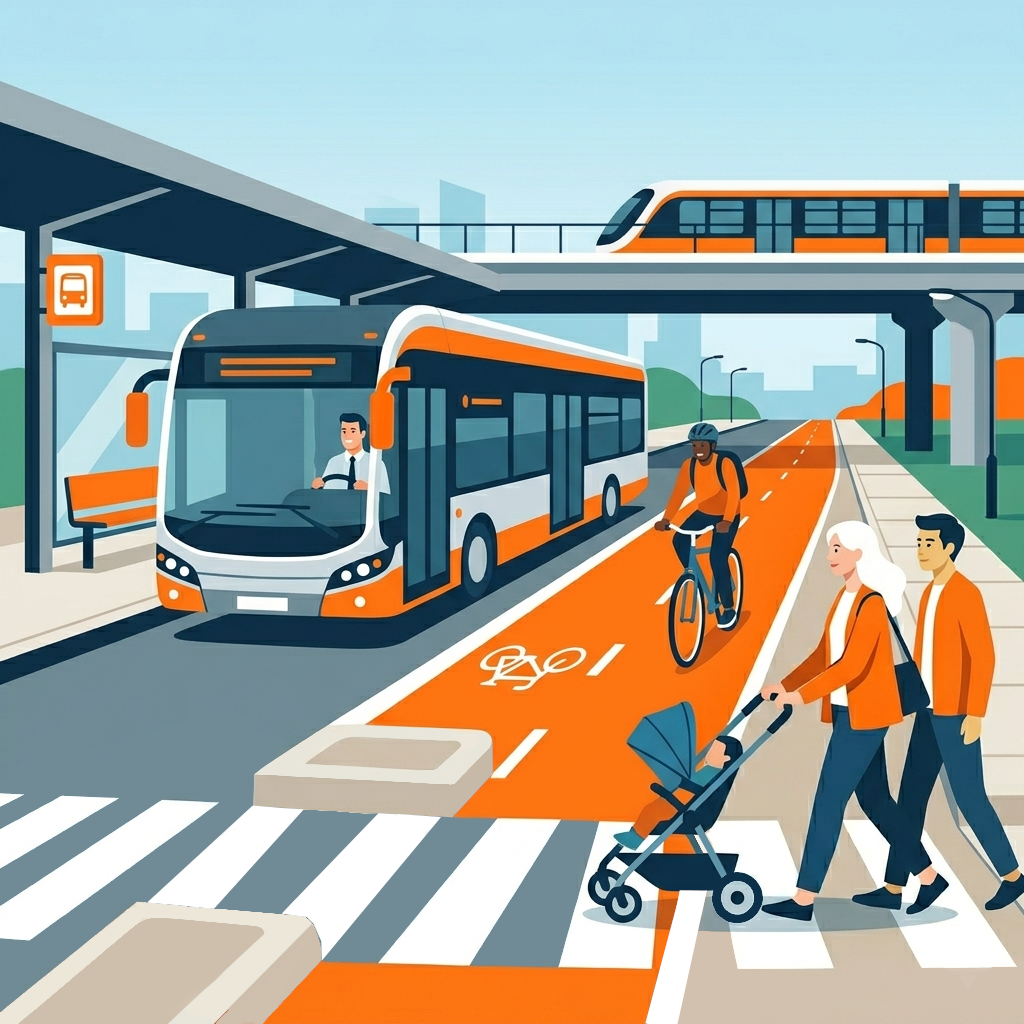
Transit is the place where small, specific changes compound into a system that actually serves the people who depend on it. The next council should make a handful of concrete commitments and finish them.
Main points
- A Health Transit Corridor to the regional hospital. The first transit priority is direct, frequent service from the major exchanges and the Hullo terminal to Nanaimo Regional General Hospital. Fifteen minutes during peak, thirty minutes off-peak.
- A real review of the buses people actually use. The Rapid #1, the #7, the #15, the #30, and the #40 carry most of Nanaimo's riders and deserve a public review with published findings and deadlines for change.
- Champion the Regional District of Nanaimo's Three-Year Transit Improvement Program. The board approved it unanimously. The funding ask is in front of BC Transit. Nanaimo's councillor on the Regional District should be the loudest voice making the case.
- Triple the sidewalk infill budget. $300,000 a year covers a few crosswalks. $900,000 a year starts working through the backlog and matches what the City's adopted Complete Streets policy actually requires.
- Continue the Complete Streets program past Third Street. Midtown Gateway and Third Street are working. The next two projects should be committed to before the 2027 budget cycle.
- Secure bike parking downtown. One covered, attended facility, contracted to a community operator, within twelve months of the new council taking office.
- Align Route 25 with the Hullo ferry. Vancouver coordinates buses with BC Ferries at Tsawwassen. Nanaimo can do the same. The fix is a schedule alignment that can happen in one operating cycle.
- Treat the rail corridor as part of the transit network rather than as a museum piece. Eighty percent of the Island's population lives near the tracks. Freight first, because that pays the bills. Passenger service later, on a corridor that has been brought up to standard.
Policy detail
The Health Transit Corridor
The Nanaimo Regional General Hospital is the central healthcare facility for everyone between Victoria and Campbell River, and the main bus to it currently runs once an hour. For seniors, people without cars, patients without family caregivers, and anyone trying to visit a family member after surgery, that schedule is the difference between getting to the hospital and not getting there.
The first transit priority for the next council is a Health Transit Corridor: direct, frequent service from the major exchanges (Country Club, Woodgrove, downtown) and the Hullo terminal to the regional hospital, with target frequencies of fifteen minutes during peak periods and thirty minutes off-peak. The capital cost is comparatively small. The provincial cost-sharing model through BC Transit covers most of the operating expense. What is needed is a council that prioritizes this as the top operational ask going to BC Transit and the Regional District, ahead of less time-sensitive requests, and keeps the file moving until the frequencies are real.
This connects directly to the BC Cancer Centre construction phase running through 2028. Twenty thousand annual treatments will be delivered locally instead of requiring patients to travel to Victoria or Vancouver. The patients arriving for those treatments include people who are in no condition to drive themselves, change buses three times, or wait an hour at a covered shelter on a wet November morning. The Health Transit Corridor is the infrastructure those patients need, on the timeline the construction is creating.
The buses people actually use
Five routes carry most of Nanaimo's riders. The Rapid #1 along the Highway 19A spine. The #7 connecting downtown and Vancouver Island University. The #15 covering the South End and Cinnabar. The #30 for Hammond Bay and Linley Valley. The #40 to Cedar. Frequency on the Rapid #1 was upgraded from thirty-minute to twenty-minute service in January 2026, which is real progress. The other four have not received the same attention.
The next council should commission a public review of those five routes with a specific scope: current ridership, frequency, span of service, on-time performance, and the gap between the route's design and the trip patterns its riders are actually taking. The findings should be published. The recommended changes should come with deadlines. The five-year Transit Redevelopment Strategy is at its mid-point and gives the natural window for this review to happen.
The objective is not a glossy plan. It is to identify the half-dozen specific changes (an extra trip in the morning peak, a one-block route adjustment to reach a new transit-oriented housing development, an evening span extension on the route serving the university) that compound into a system that works better. Most of the change Nanaimo riders need from the bus system is small, specific, and unglamorous. The councillor's job is to make it happen.
The funding fight at the Regional District
The Regional District of Nanaimo board unanimously approved a Three-Year Transit Improvement Program in 2024. It includes the route frequency upgrades, the handyDART expansion, the Downtown Transit Hub completion, and the operational additions that BC Transit and the Regional District need provincial funding to deliver. The funding ask is in front of BC Transit. The bottleneck is provincial.
The councillor that Nanaimo sends to the Regional District board has the platform to make that case more loudly than has been done so far. Joint advocacy with Parksville, Lantzville, and the Electoral Areas, on a single timeline with a single ask, is the model that has worked elsewhere. The current pattern of waiting for the request to age out at BC Transit is not delivering. A coordinated regional voice is the cheapest political infrastructure a council can build.
Sidewalks and Complete Streets
The Pedestrian Unallocated fund, which pays for sidewalk infill across the city, is currently $300,000 per year. That funds a few crosswalks. Several neighbourhood associations submitted priority requests in 2025 that have not moved because the budget cannot reach them.
The next council should triple the sidewalk infill budget to $900,000 per year. That is the level required to start working through the backlog of missing connections in the neighbourhoods that have been waiting longest, and to deliver on the safety the City's adopted Complete Streets policy claims to want. Sidewalks are how a city actually keeps its kids, its seniors, and its disabled residents moving.
The Complete Streets program is the larger frame. The Midtown Gateway project on Bowen Road was substantially completed in February 2026. The Third Street project running through the South End is on track for fall 2026. Both projects show what happens when the City treats roadways as infrastructure shared between cars, buses, bikes, and people walking, instead of as exclusive roadway for cars with leftover space for everyone else. The funding model and the project pipeline should keep moving past Third Street. The next council should commit to the next two projects on the program list, with timelines, before the 2027 budget cycle.
Bike parking and the Hullo connection
The downtown bike parking situation is one of the cheapest improvements to mobility the City can make. A secure, covered, attended bike parking facility downtown costs a small fraction of a single block of arterial road and removes the most common reason people give for not biking to work or to events: the bike will be stolen. Other Canadian cities have assigned the operation of these facilities to a community organization or non-profit, which keeps City staff out of day-to-day management. The next council should commit to one downtown bike parking facility, contracted to a community operator, within twelve months of taking office.
Route 25 is the bus that connects the Hullo ferry terminal to downtown and the major exchanges. The Hullo is one of the best things that has happened to downtown Nanaimo in years. The current bus schedule does not match the Hullo's sailings. Vancouver coordinates its bus arrivals with the BC Ferries sailings at Tsawwassen. There is no operational reason Nanaimo cannot do the same. The fix is a published schedule alignment between BC Transit and Hullo. It can happen in one operating cycle.
Rail at the corridor level
The Island Rail Corridor runs the length of Vancouver Island from Victoria to Courtenay. Roughly eighty percent of the Island's population lives within a few kilometres of the tracks. The corridor was last in regular passenger service in 2011 and is currently used for limited freight movement by Southern Railway of Vancouver Island.
The corridor is a transit asset. The freight movement that pays the bills is what makes restoration economically defensible, which is why the Wellcox Yard to Duke Point freight spur (covered in detail under Jobs, Growth and Your Tax Bill) is the near-term commitment. Passenger service, including airport service, is the longer-term goal once the corridor has been brought up to standard.
The next council should treat the rail corridor as part of Nanaimo's transit network rather than as a museum piece or a hiking trail. That means defending corridor protection in the Official Community Plan, supporting the Island Corridor Foundation's funding asks for restoration work, and being a serious participant in the regional discussion about what passenger rail on the Island looks like in the next decade. Federal funding through the Trade Diversification Corridors Fund is the vehicle that makes this conversation possible now in a way it has not been before.
Join my mailing list
Get inspiration, updates and, cool stuff!